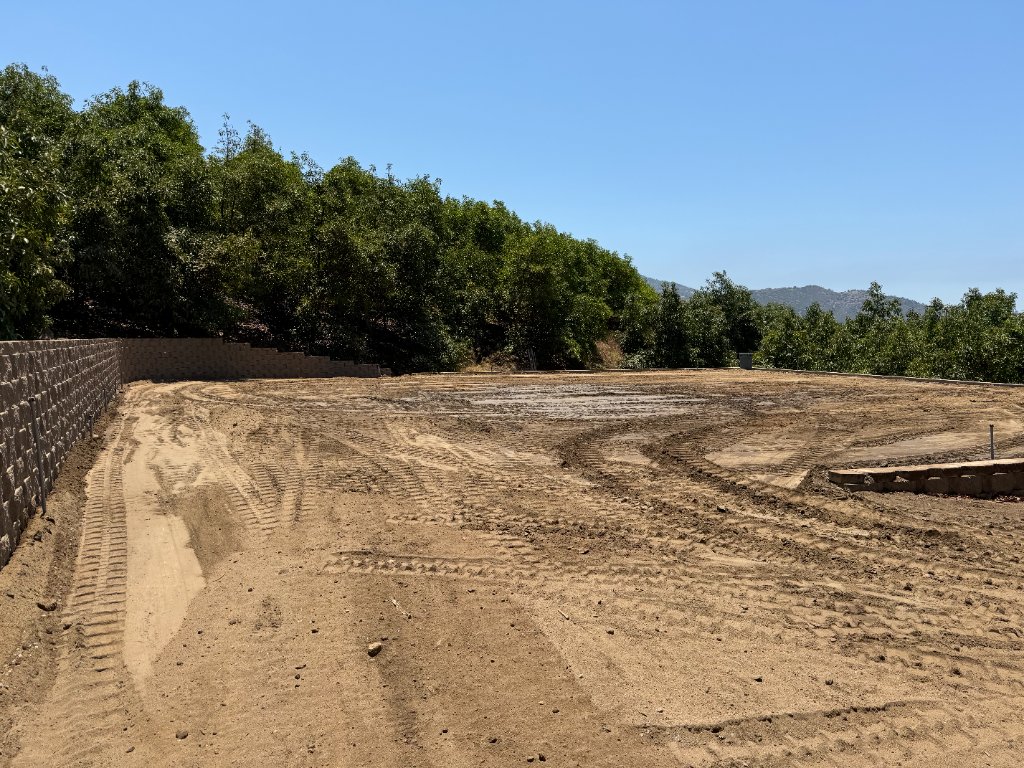
If your San Diego property has large rocks, boulders, or buried rock formations, you are not alone. Much of San Diego County sits on rocky terrain, especially in areas like Poway, Blossom Valley, and the East County hills. Large rock removal is a common need for homeowners preparing to build, landscape, or simply reclaim their yard.
Why Rock Removal Is Different
Removing rocks is not the same as moving dirt. Soil can be scooped and hauled with standard equipment, but rocks require different tools and techniques depending on their size and how deeply they are embedded.
Small rocks and gravel can be screened out of soil using a rock bucket or sifting attachment. But large boulders, some weighing hundreds or even thousands of pounds, require specialized rock clearing equipment and often a different approach entirely.
Types of Rock Removal
The method used depends on the size and location of the rock:
Surface Rocks
Rocks sitting on or near the surface can often be picked up or pushed aside using a skid steer with a rock fork or bucket. These are the easiest to remove and are common in areas where soil has eroded, exposing previously buried rocks.
Partially Buried Boulders
Rocks that are partially buried require more effort. A dirt excavator can dig around the rock to expose it, then lift or roll it out of the ground. For larger boulders, chains or straps may be used to secure the rock before lifting.
Solid Rock and Bedrock
In some areas of San Diego, especially Poway and parts of El Cajon, solid rock and granite lie just below the surface. Removing this type of rock requires hydraulic breakers, rock saws, or even blasting (though blasting is rare in residential areas). A single-pass ripper on an excavator can fracture softer rock, making it possible to remove in pieces.
Rock and Dirt Removal
In many cases, rock removal is part of a larger project that also involves moving soil. Rock and dirt removal often go together. You clear the rocks, then grade the soil, then haul away the excess. A contractor with the right equipment can handle both in one visit, saving time and money.
Choosing the Right Rock Clearing Equipment
The equipment needed for rock removal depends on the job:
- Skid steer with rock bucket - Great for surface rocks and screening gravel from soil
- Excavator with thumb attachment - Ideal for picking up and moving medium to large rocks
- Hydraulic breaker (hoe ram) - Used to fracture solid rock and large boulders
- Rock saw - Cuts through hard rock when breaking is not enough
- Dump truck or trailer - Needed to haul rocks away from the site
A contractor experienced with San Diego terrain will have the right combination of equipment and know which tools to use for each situation.
What to Expect
When you hire a contractor for large rock removal, the process typically includes:
- Site assessment - The contractor identifies the rocks, estimates their size and depth, and determines the best approach
- Equipment selection - The right rock clearing equipment is brought to the site
- Rock removal - Rocks are dug out, broken up, or lifted depending on size and location
- Hauling - Rocks and excess dirt are loaded and hauled away
- Site grading - The area is graded and leveled after removal
Why Hire a Professional
Large rock removal is dangerous work. Boulders can shift unexpectedly, equipment can damage underground utilities, and improper techniques can damage your property. A licensed, insured contractor with rock removal experience will get the job done safely and efficiently.
Dirt Wurx has the equipment and experience to handle large rock removal and rock and dirt removal across San Diego County, from the rocky hills of Poway to the boulder-strewn lots of Blossom Valley.
Need Rocks Removed?
If rocks are in the way of your project, call Dirt Wurx at 619.817.7941 for a free estimate. We will assess the site and bring the right equipment to get the job done.