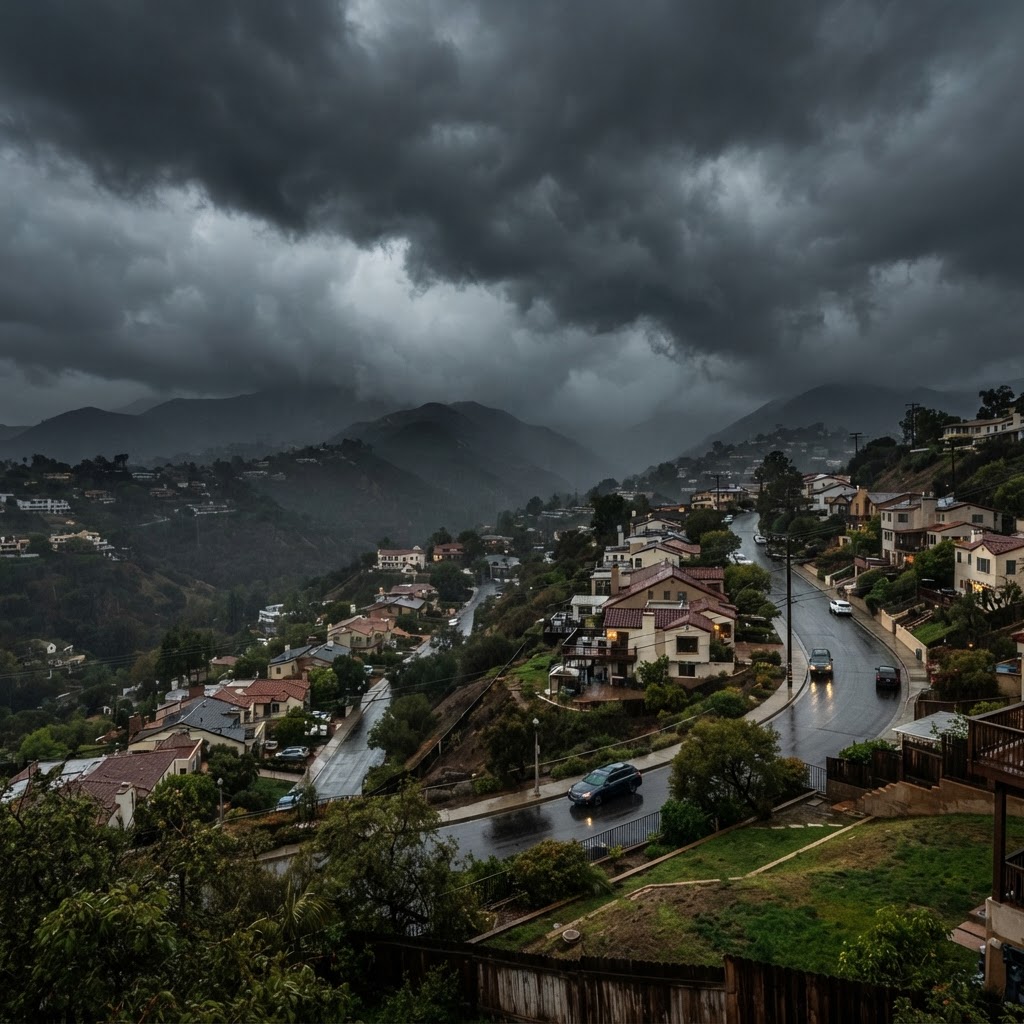
NOAA's Climate Prediction Center has been tracking a building El Niño through 2026, and the forecast heading into fall is one of the strongest signals in years. Forecasters put the odds of a very strong El Niño during the fall and winter of 2026-2027 near 90 percent, and Southern California sits in the part of the country that leans toward above-average precipitation when that pattern sets up. For San Diego homeowners, the translation is simple: a wet winter is more likely than not, and the time to prepare is before the first atmospheric river arrives, not during it.
We Have Seen This Movie Before
San Diego does not need a hypothetical to know what a big rain year does. In January 2024, a single powerful storm dropped months of rain in a day and pushed Chollas Creek over its banks in the Southcrest neighborhood, flooding hundreds of homes. It was one of the most damaging flood events in the city's recent history, and it exposed a problem the city has acknowledged ever since: sections of San Diego's storm channel system were never built to carry the volume of water a storm like that delivers.
That gap matters for your property. When the public system backs up, the water does not politely wait its turn. It finds the low spot, and if the low spot is your yard, your driveway, or the soil against your foundation, that is exactly where it settles.
Your Grade Is the First Line of Defense
City infrastructure gets the headlines, but the thing that actually decides whether your property floods is much closer to home. It is the shape of your own ground.
Grading is the slope of your lot. A properly graded yard sheds water away from the house and toward a safe path like the street, a swale, or a drainage system. A poorly graded yard does the opposite. It collects storm water and holds it against your foundation, your slab, or your neighbor's property.
Drainage systems like French drains and catch basins are the second line of defense. They catch the water that grading alone cannot handle and pipe it away. When both work together, most properties come through a heavy El Niño season without an incident. When either one fails, you usually find out during the worst possible week of the year.
Warning Signs to Check Now
Walk your property and look for these before the rains arrive:
- Standing water or soggy ground that lingers a day or two after rain
- Soil that slopes toward the house instead of away from it
- Water stains on the foundation or stem wall
- Erosion ruts in the yard or along the driveway
- Downspouts dumping water right at the base of the wall
- A crawl space or garage that smells damp after storms
If you check two or more boxes, the fix gets more expensive the longer the wet season goes on.
What to Do Before the Storms Arrive
There is still time to get ahead of this. The highest-value steps:
- Watch your yard during the first rain. Where does the water actually go? Take photos. They tell a grading contractor exactly what needs to be fixed.
- Extend your downspouts. Water should exit at least five feet from the wall, onto ground that slopes away.
- Clear debris from drainage paths. Swales, area drains, and v-ditches only work when they are open.
- Fix the grade, not just the symptom. Adding soil and building proper slope against the foundation is often less expensive than people expect.
- Get a professional opinion. If your lot slopes toward the house, sits at the bottom of a hill, or already holds water, an experienced grading contractor can tell you quickly what it needs.
Common Questions
We pulled together straightforward answers to the questions San Diego homeowners ask most about excavation, grading, drainage, permits, and costs, including how El Niño changes the math for local properties. Read the Dirt Wurx FAQ.
Get Ahead of It
Dirt Wurx SD is a licensed, owner-operated grading and drainage contractor based in Santee. We handle drainage grading, French drains, foundation grading, and erosion control for homeowners across San Diego County. If the El Niño forecast has you looking at the low spot in your yard and wondering where that water will go, call us at 619.817.7941 or read more about our drainage and grading services.