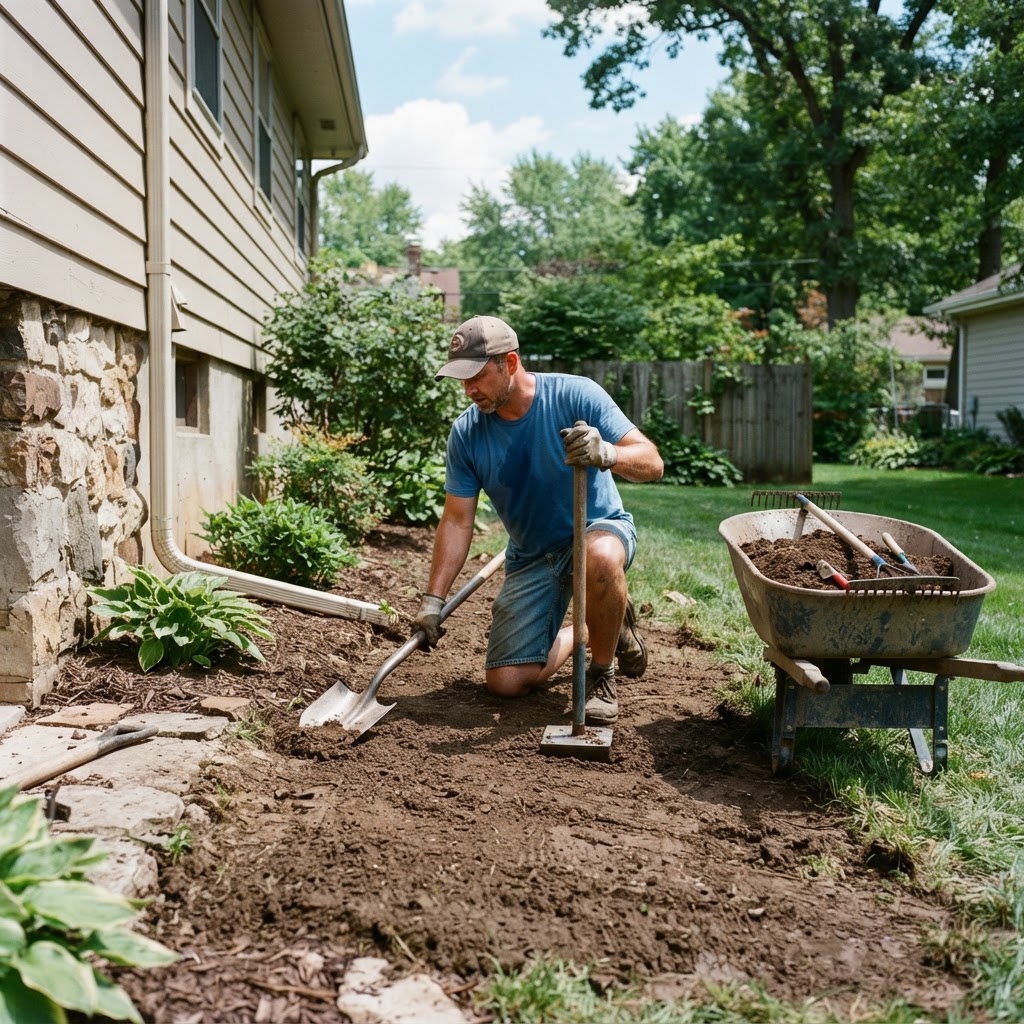
Water pooling against your house after every rain is one of those problems that is easier to fix than most homeowners expect. If your yard slopes toward the foundation, every storm is working against your home. The good news is that a lot of regrading work is genuinely DIY-friendly. Here is how to grade a yard away from your house, and how to know when the job has outgrown the shovel.
Why Yard Slope Matters So Much
The soil in the first ten feet around your foundation decides where storm water goes. The standard builders aim for is a fall of about six inches across those first ten feet, then a consistent slope away toward a safe outlet. When the grade is right, water leaves. When it is wrong, water soaks into the ground against your foundation, and that moisture works its way into slabs, stem walls, and crawl spaces. Over seasons, it causes settling, staining, and expensive repairs.
Check What You Have First
You do not need fancy equipment to measure your slope:
- Hammer a stake into the soil right against the foundation and tie a string to it a few inches above the ground.
- Walk the string out ten feet from the house, pull it tight, and hold a line level on it.
- Level the string, then measure from the string down to the ground at the ten-foot mark.
That number is your current fall. Six inches is the target. Two inches or less, or a measurement that shows the ground is higher ten feet out than at the wall, means you have a problem.
DIY Regrading, Step by Step
If you need to add a few inches of slope, here is the process:
- Watch the next rain. Photos of where water actually flows are worth more than any measurement.
- Plan the new grade. You are aiming for that six inches of fall in the first ten feet, then a gentle, consistent slope to a safe outlet. Never grade water toward a neighbor's lot or a retaining wall.
- Get clean soil. Use a compactable fill soil or a fill and topsoil mix. Avoid pure mulch or organic matter, which decomposes and leaves the slope settling again in a year.
- Add soil against the foundation. Build the slope up in thin layers. Important: never bury the foundation itself. Leave at least four to six inches of concrete or stem wall showing below your siding.
- Tamp as you go. Compact each layer with a hand tamper. Loose soil settles, and a settled slope is a slope you get to do twice.
- Blend and finish. Feather the new soil into the surrounding yard so there are no berms or dips, then seed or mulch to hold it in place.
- Test it. Run a hose at the top of the slope and watch the water. It should move away from the house without pooling.
The whole job is very doable with a wheelbarrow, a shovel, a tamper, and a free weekend for a typical strip along one wall.
When to Call a Pro
DIY regrading has a hard edge, and knowing where it is saves money:
- The yard needs to be cut, not filled. If the high spot is ten feet from the house and the low spot is at the wall, you may need to excavate and regrade the whole area, which means machinery.
- The area is large. A skid steer with a laser grader does in hours what a shovel does over several weekends, and the grade comes out precise.
- The slope problem is severe or near a retaining wall. Cut and fill near structures needs to be engineered and compacted correctly or you create a bigger problem.
- The soil is heavy clay or expansive. San Diego clay swells and shrinks with moisture. Compaction and material choice matter more than they look.
- The foundation is already showing signs. Cracks, sticking doors, or water intrusion mean you want a professional eye on the whole drainage picture, not just the soil.
Need a Machine Instead of a Weekend?
Dirt Wurx SD handles yard regrading and foundation grading across San Diego County, from small residential fixes to full lot regrades. Call us at 619.817.7941 for a free estimate, or read more about our drainage and grading services.