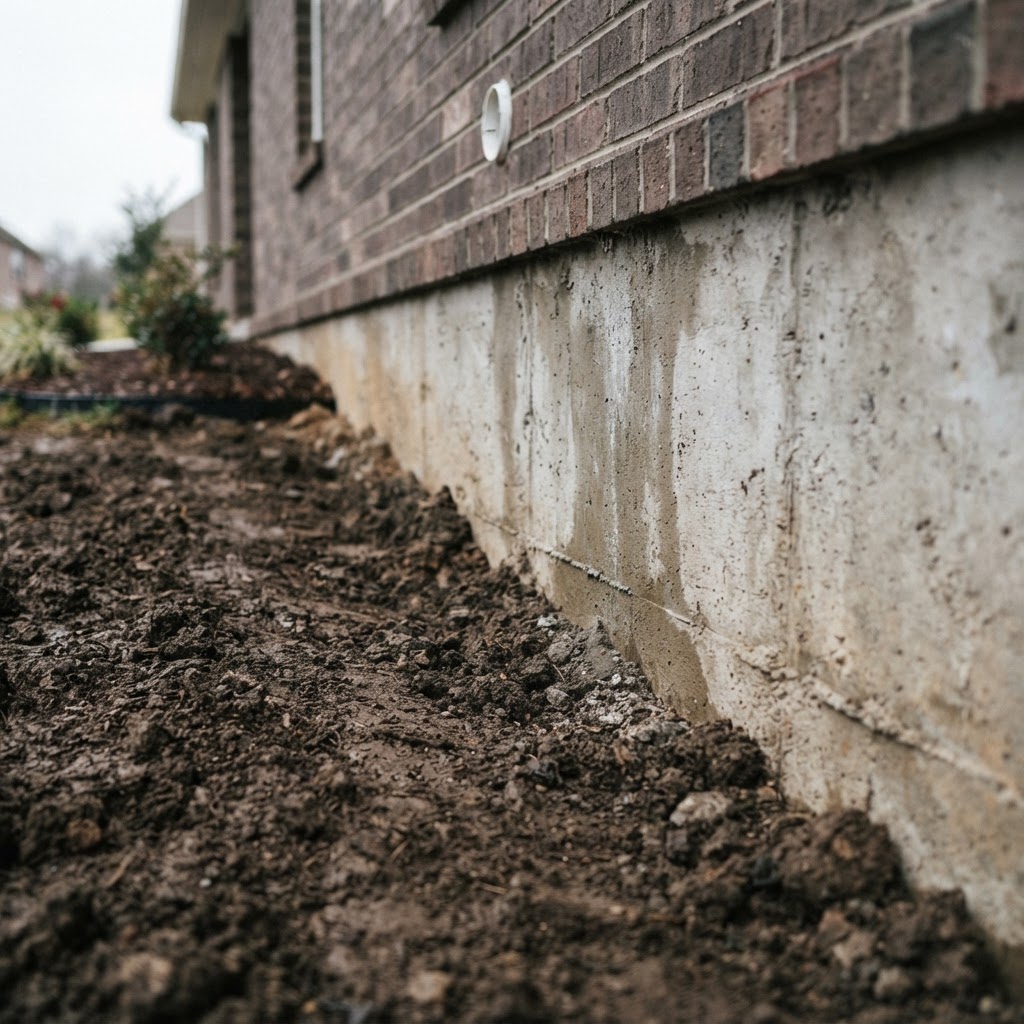
Most homeowners spend a lot of time thinking about their roof, their paint, and their landscaping. Very few think about the six inches of dirt that sit against their foundation, which is a shame, because that soil decides where every drop of storm water goes. Foundation grading is one of the cheapest ways to protect one of the most expensive parts of your home.
What Foundation Grading Is
Foundation grading is the shaping of the soil in the zone around your house, usually the first ten feet, so that water drains away from the foundation instead of toward it. The industry standard is a fall of about six inches across the first ten feet from the wall, roughly a 2 to 5 percent slope. Beyond that zone, the grade should continue toward a safe outlet like the street, a swale, or a drainage system.
It sounds trivial. It is not. Water is the single most common source of foundation trouble, and gravity is on its side every time it rains.
Why the Ground Around Your House Matters So Much
San Diego adds its own twist: expansive clay soil. Clay absorbs water, swells, and then shrinks as it dries. A foundation surrounded by soil that gets soaked and dried over and over gets pushed and pulled with every cycle. Over years, that movement shows up as cracks, sticking doors, and uneven floors.
Standing water against a stem wall or slab does its damage more directly. It soaks into concrete, works into the crawl space, and keeps the ground under and around the foundation saturated. The fix is not complicated. Keep the water moving, and the soil stays drier and more stable.
Signs Your Foundation Grading Needs Work
- The soil against the house is higher, level with, or sloping back toward the foundation instead of falling away
- Puddles sit against the wall after rain
- The soil pulls away from the slab during dry months, leaving a gap that funnels water straight down during wet ones
- Water stains or efflorescence (white mineral streaks) on the stem wall or in the crawl space
- A musty smell in the crawl space or ground-floor rooms after storms
- Erosion channels running from downspouts along the wall
What a Foundation Grading Fix Actually Involves
A professional foundation grading job usually has three parts:
- Reshaping the grade. Cutting high spots and adding compactable fill to build the correct slope away from the wall, in compacted lifts so the new grade holds.
- Managing roof water. Extending downspouts well away from the house, or tying them into drains so the roof is not dumping hundreds of gallons at the wall during a storm.
- Tying into a drainage path. When the lot cannot shed water with slope alone, a French drain or area drain carries the rest away.
On most homes, the reshaping itself is quick work with the right machine, which is why foundation grading is often one of the highest-value projects on the property: low cost compared to the foundation repairs it prevents.
Do It Before the Wet Season
Foundation grading is a dry-season job. You want the soil workable, the access easy, and the fix in place before the first heavy storms test it. With forecasters watching a strong El Niño heading into the 2026-2027 rainy season, this fall is the window to get it done.
Dirt Wurx SD handles foundation grading, regrading, and drainage across San Diego County. Call us at 619.817.7941 for a free estimate, or read more about our drainage and grading services.